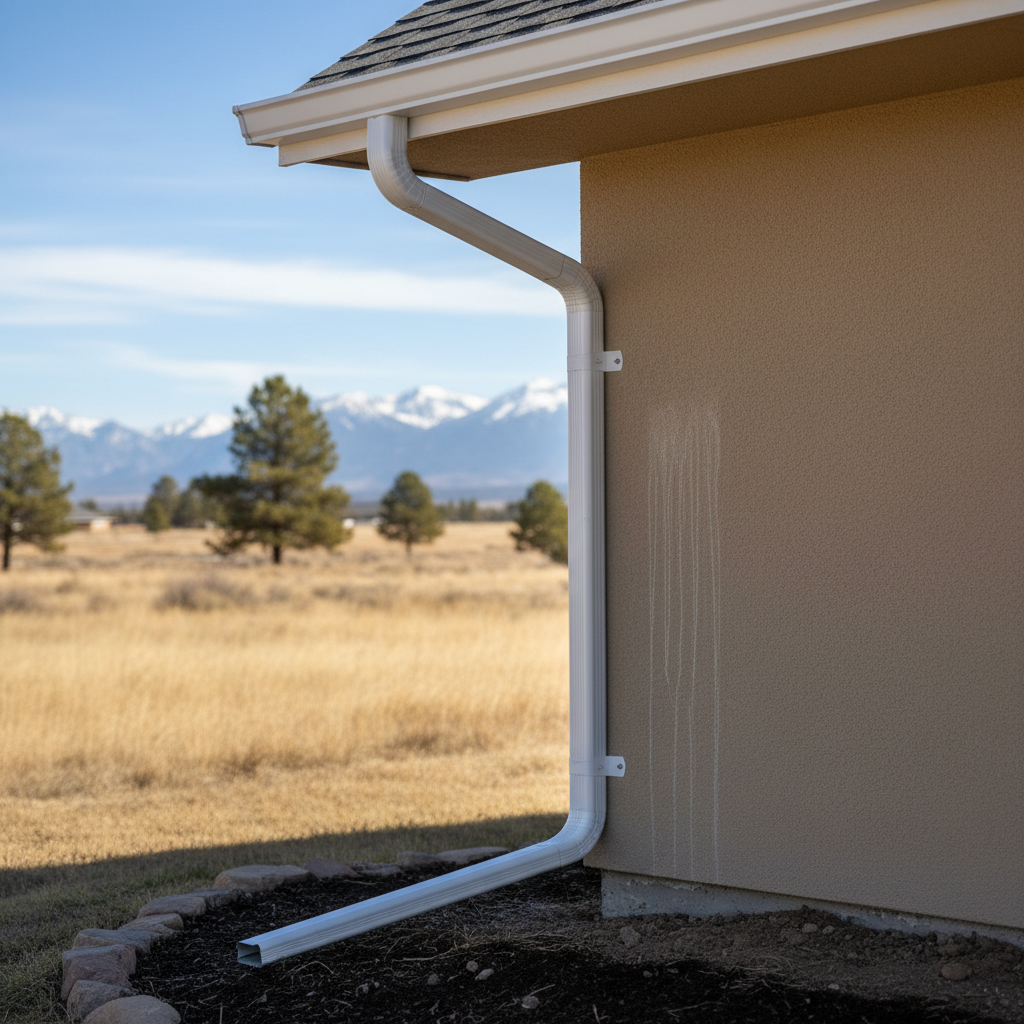
How many downspouts do I actually need for my house?
This isn't a one-size-fits-all answer, and honestly, it's one of the most common questions I get. The number of downspouts you need really depends on a few things: your roof's size, its pitch, and the size of your gutters. A good rule of thumb I use is to aim for one downspout for every 20-40 feet of gutter. If you've got a really steep roof, or you're using smaller 5-inch gutters, you'll want to lean towards the lower end of that range—maybe one every 20-25 feet. Larger 6-inch gutters can handle a bit more water, so you might be able to stretch it to 30-40 feet. The main goal here is to make sure your gutters don't overflow during a heavy rain. Here in Great Falls, we get some decent downpours, especially during spring and early summer, so you definitely don't want to skimp. Too few downspouts mean water backs up, sits in your gutters, and can spill right over, defeating the whole purpose.
What's the best material for downspouts?
Just like gutters, downspouts come in a few common materials, and each has its good and bad points. Aluminum is probably the most popular choice, and for good reason. It's lightweight, doesn't rust, and comes in a ton of colors. Plus, it's pretty affordable. Steel, usually galvanized, is tougher than aluminum. It can take a beating, which is great if you've got kids or pets running around, but it's heavier and can rust if the coating gets scratched. Copper is the Cadillac option – it looks fantastic, lasts forever, and develops a beautiful patina over time. But it's expensive, and not everyone wants that look. Vinyl or PVC is the cheapest, but I'm not a big fan for our climate. It gets brittle in the cold Montana winters and can crack or shatter easily. For most folks, aluminum hits the sweet spot for durability, appearance, and cost. Aim High Gutter Solutions primarily works with aluminum and steel because we know they hold up best here.
Where should downspouts be placed on my house?
Placement is crucial. You want your downspouts to direct water away from your home's foundation. Period. Typically, we install downspouts at the corners of your house, or at low points in your gutter runs. If you have a really long gutter run, you might need one in the middle to prevent sagging and ensure proper drainage. The key is to make sure the water has a clear path away from the foundation. You certainly don't want it dumping right next to your basement wall, especially if your house is older and doesn't have the best foundation drainage. Think about where the water will go once it hits the ground. If it's just going to pool up and soak into the soil, you're asking for trouble down the line with foundation issues or a wet crawl space, right?
How far away from my foundation should the water discharge?
This ties right into placement. The absolute minimum you want is about 4 to 6 feet away from your foundation. But honestly, more is better. You can achieve this with extensions, splash blocks, or even buried drainage systems. The goal is to get that water to drain away from your house's footprint so it doesn't saturate the soil around your foundation. Here in Great Falls, especially with some of the clay soils we have in areas like the Fox Farm neighborhood, water pooling near the foundation can lead to significant issues like hydrostatic pressure, which can crack basement walls. So, extend those downspouts!
Can I connect my downspouts to an underground drainage system?
Absolutely, and it's often a great idea, especially if you want to keep your yard looking tidy or if you have a lot of water to manage. Connecting downspouts to an underground system involves running pipes, usually PVC, from the downspout exit point to a more distant discharge area, like a storm drain, a dry well, or even just a sloped part of your yard far from the house. This is a more involved installation, often requiring trenching, but it keeps water completely out of sight and away from your foundation. It's a fantastic solution for managing heavy rainfall and protecting your landscaping and foundation. Just make sure the system is properly sloped to prevent standing water in the pipes, which can freeze and cause problems in winter.
What's the deal with downspout screens or filters? Are they worth it?
Downspout screens or filters are designed to keep debris, like leaves, twigs, and shingle grit, from clogging the downspout itself. They usually sit right at the top opening of the downspout, where it connects to the gutter. Are they worth it? For most homes, yes, I'd say so. They definitely cut down on how often you'll need to clear out a clogged downspout, which is a real pain. Nothing's worse than seeing water pouring over your gutters because the downspout is packed solid. They aren't a magic bullet – you'll still need to clean your gutters periodically – but they act as a good first line of defense. Just make sure they're installed correctly so they don't restrict water flow too much.
How do I know if my existing downspouts are sized correctly?
This goes back to the first question a bit. If you're seeing your gutters overflow during a moderate rain, even when they're clean, there's a good chance your downspouts aren't doing their job. They might be too few, too small, or poorly placed. Standard downspouts are typically 2x3 inches or 3x4 inches for rectangular, or 3-inch or 4-inch for round. For a typical residential roof, 2x3 inch downspouts are often paired with 5-inch gutters, and 3x4 inch downspouts with 6-inch gutters. If you've got big roof sections and only small downspouts, they just can't handle the volume of water. It's like trying to drain a bathtub with a coffee stirrer. If you're unsure, it's worth having a pro take a look. We can assess your roof area, gutter size, and pitch to tell you if your current setup is up to snuff or if you need an upgrade.